 |
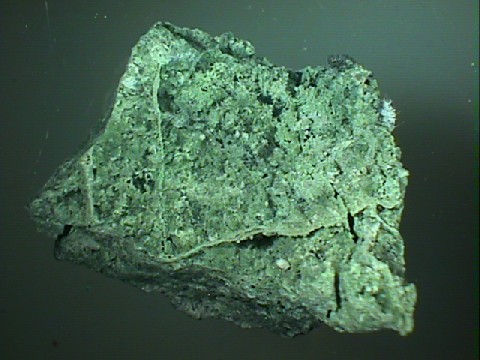
| http://www.galleries.com/minerals/silicate/jadeite/jadeite.jpg Jadeite is a mineral. Jadeite is green, greenish gray, pale blue and purple, white, and rarely yellow and pink. Jadeite is vitreous it splinters to having uneven chunks when you hit it or drop it. It has a Monoclinic crystal structure. It's hardness is 6.5. It's streak is white.It's Chemical Composition is Sodium, Aluminum, silicate, and sometimes some calcium and iron. Jadeite has a Conductivity is 14 GPA and 1000K. Jadeite is a mineral that when mixed with a certain other mineral it makes the Gemstone Jade. Jadeite is used for eons in China and central America as an ornamental and religious stone of deep significance. Jadeite is also found in Gulbashen, which is in the Karakash Valley of People's republic of China. It has also been long known that the Mesoamerica cultures produced jadeite objects, but for centuries the geological resources have been unknown.But in the later 20th century an in place jadeite deposit was found near the Matuga Valley in Guatemala.
S&EP
SP3
I identified questions to be investigated when I asked myself what my mineral physical properties, where is it found, what is it used for who found it and all sorts of things. I found these things when I looked at mineral galleries found and picked out my mineral and looked at the physical properties and other things that I needed to find out.
|
Sunday, March 13, 2016
Jadeite

Sunday, March 6, 2016
minerals, rocks & how you find out what they are
 |
| https://s-media-cache-ak0.pinimg.com/236x/f7/37/80/f73780904937d19762cfd55fc75057b0.jpg
A mineral is something that consists of Rocks, Jewels, and Gems. A mineral can only be a mineral if when you found it it was a solid. There are three different types of rocks Sedimentary, Igneous, and Metamorphic. Igneous rock forms when lava cools and hardens. Then when it gets exposed to weather weathering and erosion take charge and when they work together the break down the rocks then move the rock away from each other.
Then in a few years of this process happening these pieces of rock turn to sediment. Then this sediment mixed with pebbles, shells, sand, and dirt becomes sedimentary rocks. The fact that these are made up of lots of different stuff makes them the rocks that you will most likely find fossils in it. Metamorphic rock is when sedimentary rocks start melting into magma but then never melt all the way.
To identify a rock or mineral there are quiet a few tests to use like color, cleavage, hardness, luster, crystal structure, density, and streak. Color defines a mineral or rocks color. Cleavage determines if the mineral or rock crumbles to little shards ( no clean cut) or into big pieces ( clean Cut). Hardness determines how hard the mineral is. Luster determines if the rock looks metallic, not metallic, dull, peril, Etc. Crystal Structure is the structure of the minerals or crystals. Density is how dens is it. Streak is what color streak does it have.
S&EP
SP3
I collected data on what mineral was which when I preformed test and then put my data in a machine and identified my minerals. I did this so that I could understand the test what they were and how they would help me with figuring out my mineral, I also did this to identify the minerals that I had found on the interactive.
|
Saturday, February 27, 2016
Phosphorus
 |
| https://www.brightagrotech.com/wp-content/uploads/2013/10/Phosphorus.png |
S&EP
SP8
I used scientific text to find out about phosphorus. I did this so that I could complete a project or thought and back it up with evidence. I also so did this because it would make sure that what I said on my project wasn't true or could be misunderstood.
Sunday, February 14, 2016
Atoms and what makes up this earth the place where we live
 |
| https://www.wpclipart.com/science/ atoms_molecules/atom_diagram.png ATOM |
 |
https://www.wpclipart.com/science/
atoms_molecules/atom_diagram.png
MOLECULE |

http://f.tqn.com/y/chemistry/1/W/Z/
g/2/GettyImages-.jpg
http://www.ducksters.com/science/chemistry/mixtures.gif
MIXTURE COMPOUND
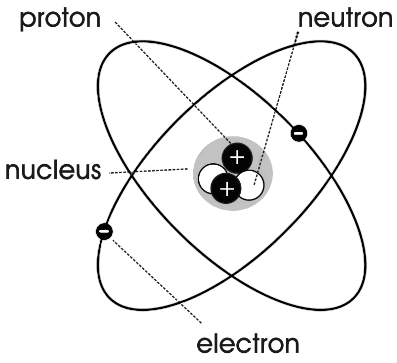
An atom is what makes up the earth and everything we know of. An atom is made up of four things, a nucleus, protons, neutrons, and electrons. The nucleus is the center of the atom, protons and electrons are the things that make it. A proton it what makes up the nucleus, it is also what gives an element on the periodic table of elements it's periodic number. Let's say that a atom has 3 protons then it has a periodic number of 3. Also a proton has an positive electric charge, that is why some people put plus signs on it when they draw it.
A neutron is another part that makes up the nucleus, a neutron has a neutral electric charge. An electron travels around the nucleus and creates almost a barrier around it, fun fact the number of protons in an atom is the same as the number of electrons let's say you had 9 protons you would have 9 electrons. Electrons have a negative charge.
An element is made up of molecules. A molecule is when two or more of the same type of atom chemically bind together. When we make these into elements then we can sort them in the periodic table of elements which is organised by periodic number. A periodic number in the number of protons in an atom, each substance or element has it's own periodic number, like hydrogen has a periodic number of 1.
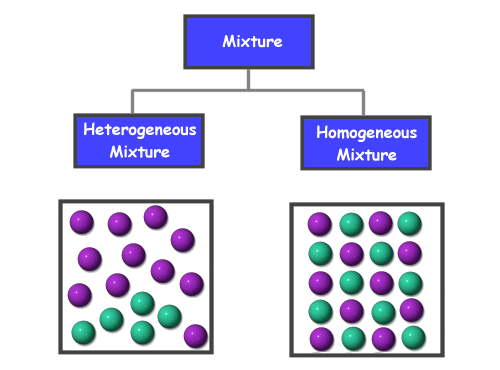
A mixture is when two different substances or elements are forced to mix together by physical bonds, when this happens no chemical reaction occurs so that makes it so you can separate the two substances or elements from one another. This is like a compound but they can be taken apart.
A compound is when two different substances or elements combine chemically so that a chemical reaction occurs. Once this happens their is no going back and you can not separate them again. You know that a chemical reaction has occurred when your senses sense something different about the substance.
A compound is when two different substances or elements combine chemically so that a chemical reaction occurs. Once this happens their is no going back and you can not separate them again. You know that a chemical reaction has occurred when your senses sense something different about the substance.
S&EP
SP6
SP6
In science I explained molecules, atoms, compounds, and mixtures. I did this by making sure that all the detail that was needed to be able to explain this in a kid friendly way but still complicated enough for grown ups and older kids to understand. I also made sure that my work was correct by using the stuff that my teacher said and paraphrasing it to a way that it had the proper and right meaning. Then I wrote about it which finished the explanation through my work properly and efficiently.
Friday, February 5, 2016
why matter maters to us.
 |
| http://image.slidesharecdn.com/mattervocabcardsfinal-141012192145-conversion-gate01/95/states-of-matter-vocabulary-cards-1-638.jpg?cb=1413142533 |
#1   # 2. # 2. |
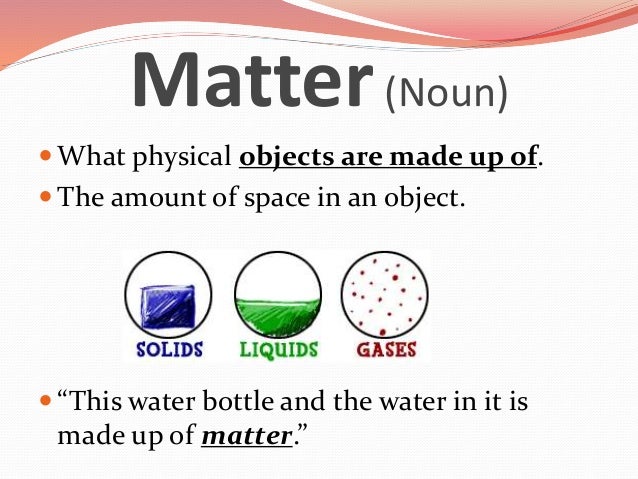
| # 1. http://www.schools.pinellas.k12.fl.us/educators/tec/davis2/matter.ppt/img009.gif #2. http://www.schools.pinellas.k12.fl.us/educators/tec/davis2/matter.ppt/img009.gif What is matter? Matter is anything that takes up space and has mass in volume. Matter is what makes the world and everything in it. If their was no matter we wouldn't be here. Anything that is solid, liquid, gas, plasma, or Be condensates is matter, this is because if the objects fall into these categories they are in states of matter so that makes it matter. Two things can happen to matter! What are those two?
The two things that can happen to matter is a physical change and a chemical change. A physical change is when you take a piece of paper and you rip cut or fold it. do you still have paper? Yes! Like if you take a pencil or a stick and break it on you knee it is still wood right ? Yes! So basically a physical change is when something happens to something that is matter but is t changes how it looks but it is still a what it was when it had no changes.
A chemical changes in matter is when something happens to matter so that it forms new matter or something new. An example of chemical changes in matter if burning. Lets say you have wood or a piece of paper and you set it on fire once the fire burns out then you have ashes. Is that the same as before it caught on fire? No! Another example of chemical changes in matter is when you bake a cake are the ingredients the same now that you have cooked them?No!
A list of physical changes in matter: A list of chemical changes in matter:
S&EP
SP3 I confirmed that backing powder was the mysterious substance by seeing how it reacts to substance and do substances we know and seeing if they act the same way and if they do then they are the mysterious substance. This is connected to matter because it is showing how different atoms act when meting others and the reactions that happen. |
Friday, January 29, 2016
Matter and how it works.
 |
http://www.intechopen.com/source/html/41410/media/image19.pngThe four states of matter are solid, liquid, plasma and gas. First it starts as a solid. A solid is the part of matter when their's almost no energy and the energy particles are clumped together. Solids have a definite size and shape. Then when the energy particles get farther apart they move faster and faster then it turns into a liquid. This process is called Melting.Once the solid has melted it turns into a liquid. A liquid is the state of matter where the energy particles are still close but not as close to each other as the solid was and they are moving faster and getting faster as they move away from each other. A liquid takes the shape of it's container. Then when the energy particles start moving farther and farther away they get faster and faster. Then the energy particles get so fast and so far away that they turn into a Gas. This process is called Evaporation.Once the liquid has evaporated it turns into a gas. A gas it the state of matter when the energy particles are moving very fast and are very far apart from each other. Gas has no definite size or shape. Gas takes up as much room as it possibly can. Then when the energy particles get faster and get farther away they turn into plasma. This process is called Lionization.S&EPSP6I explained Matter and energy through my work by talking about matter and how it works in my note book. This helps me understand matter because it tells me all about matter whenever I need it. It also helps me because it explains why matter is important and what it is (everything that is made out of atoms and particles). |
Wednesday, January 20, 2016
M&M experements
 |
| http://www.inquiryinaction.org/img/content/chapter1/mm3_alt.jpg |
Do other colors dissolve faster than others? In order o find this out you will need a flat surface, different colors of M&M's, as many plates as M&M's with two circles on it, a ruler, and a plastic cup. To start put the plate on the flat surface. Then fill the cup with water and fill one plate and then repeat till all plates are filled. Then you put one M&M in and start counting once it reaches the first circle measure how many centimeters till the next circle and keep counting. Once it has reached the last circle you divide the amount of time ( in seconds) by the area it traveled in Centimeters. The answer that you get is the speed, repeat. So, do some colors dissolve faster than others.
S&EP
SP1
In class we asked two scientific questions. The first scientific question is do M&M's dissolve in water. We found out in our experiment that they do. The second scientific question that we asked is do certain colors of M&M's dissolve faster than others the answer is no. Even though one dissolved like a tenth faster that is like no difference so the answer is no.
Sunday, January 10, 2016
Weather
http://www.weatherforkids.org/images/wind-tree.jpg

Fronts are what happens when cold air and hot air met. What you would need to make a front is hot air and cold air. This makes a front because the cold air comes and pushes up the warm air. When this happens the weather it probably not going to be on your side. A warm front is when you are on the side that the warm air is, a cold front is where you are on the side where the cold air is.
High and low pressure systems are what controls clouds. When you are in high pressure you will have little to no clouds. Why is their little to no clouds? This happens because the high pressure squeezes the water in the air so it can't expand and make clouds. When it is high pressure you can expect it to be sunny and warm. When you are in low pressure you can expect cloudy skies. Why are there lots of clouds? There are lots of clouds because the low pressure allows the water molecules to expand and make clouds. You can also expect storms and cold temperatures.
Have you ever wondered how weather forms? Well if you have you came to the right place. Weather forms by using high and low pressure systems, fronts, the water cycle, and wind. One of the main things that keeps our weather going is the convention current. This is the way that the wind blows, In a circle. The warm air goes up and to the side then it cools and goes down to the opposite side and repeats.
S&EP
SP2
In class we made a cloud in a soda bottle. This helped me with understanding how low pressure and high pressure effect the weather. I also helped me learn how clouds are made and what you need to make them. It also helped me understand why clouds usually form over firers.
Tuesday, January 5, 2016
test before winter break
The storms move west to east. When air presure is high you can expect cold tempustures. Photosinthis needs glucose and oxygen. When air pressur eis low it is cloudy and rainy.Answer A
Thursday, December 17, 2015
Charity fair

After what we did in language arts we had to trace our supplies back to where they came from and find the amount of CO2 that we put into the air every time we get the product. To do this we had to see where the product came from. Then we had to find out how it got to San Jose and how much CO2 that went into the air when it came over. After that we had to find out how far it was (in kilometers) to get here. After that we had to figure out how much of it did we need for our project. If you need a lot then it would be a thousand if you need a good amount it would be five hundred if you need a little then it was two hundred fifty.
After we figured all of this out we had to multiply the amount we need by the amount of CO2 that went into the air when whatever we brought it in gave away and then we multiplied that by the distance. The product that we got is the amount of CO2 that went into the air every time we shipped over that product. The next thing we had to do was we had to pick one product from our list of stuff that we needed to make the product and we had to write a whole paragraph about how we could reduce that amount. For ours we choose the plastic bags that we got from China. Originally it would have come on an airplane but the way that we choose to reduce the amount of CO2 that went into the air we decided that we could bring it over by boat and that made the whole number go down.
After doing this in math class we had to figure out how much it would cost us to make ten of our product. First we had to figure out how much it cost us to make one and then we multiplied that by ten. After we found out how much it cost us we found out how much we wanted to sell them for then we multiplied that by ten then we subtracted the amount that it cost us to make it and the was our answer on how much we would make if we sold ten of our item. After that we had yo do the same steps to find out how much we would make if we sold 1000 and 1000000 of our product.
In elective we had to make our trifold poster that would stand outside our table and have all of the work that we did printed and pasted on to the poster. What we needed was to have our ignite presentation and our math calculations our carbon footprint and our step by step instructions on how to make our product. In elective we also set up for the charity fair and sold it to the parents and to the oak grove school district.
Backward looking
I think that I could improve by next time not just saying what our product is and what charity we are doing it for but instead say the process of making the product and about the carbon footprint and the math calculations. I think that this would help us improve because then we could be more convincing about why they should buy our product. I also think that next time we should make more of our product because we sold out.
Inward looking
I think that our work payed off because we raised a lot of money for our charity and we sold out. I really like the way that the trifold poster came out and I think that that was a success. i liked the way that the letters that we cut out turned out and how the back round wasn't all white and plaine. I think that the one thing that I would have changed was the language arts presentation and the presentation on exhibition night.
Outward looking
I think that we were different from the others because we were the only ones that was selling our item and we also were the only charity that was a breast cancer charity. I think that we were different as while because our poster didn't look the same and we were the only people in the classroom that had free samples. We were similar to other groups because we had a trifold poster and was selling items. I also think that we were similar to other people because we all had to do the carbon footprint the math calculations and the ignite presentation.
Forward looking
One thing that I would change if we had more time was make more of the product and earlier on in the time that we were selling start advertising the fact that we had free samples. I also think that something that I would work on is making sure that I have enough change for a twenty dollar bill just in case the teacher is not around when someone hands me a 20 dollar bill or something that we can't make change for so that we don't have to turn away customers or make them wait while we try to find the teacher to get change.
Friday, December 4, 2015
The water Cycle and Atmosphere
 |
| https://farm9.staticflickr.com/8083/8265046380_91866d0550_o_d.png
The water cycle begins with a body of water heats up and turns into water vapor and goes into the atmosphere. This is called Evaporation. Then it cools down it reconnects and turns into clouds. This is called Condensation. Then when the water completely cools down it turns into water droplets or ice crystals. Then the cloud can't hold the wait and the water droplets come down as rain and the ice crystals comes down as snow. When it comes down it may freeze and that is what creates hail. This whole process is called precipitation. When it rains, snows, or hails it melts and goes into the ground or forms rivers or streams and flows back into a lake, ocean, or pond. This process is called Water collection.
The atmosphere has 4 big layers. The first layer of the atmosphere is the troposphere that is the layer where all the weather happens it is also known as the layer of change. The second layer is the stratosphere this is the layer that is above the clouds. If you were to be there right now you would probably see Jets. That is because it has no weather so the planes won't have as much turbulence. If you go above that you will find the mesosphere this is the layer that we don't really know about but it does have meteors. The last layer is theiosphere this is divided up into two parts the Exosphere and the Ionosphere. The Ionosphere it where we get all of our tech signal from.
S&EP
SP6
I created an explanation of the atmosphere when I filled out and colored my work sheet on the atmosphere. I also did it when I wrote my 1 and a 1/2 pages of notes in science. This is explaining the atmosphere because it tells us about all the layers of the atmosphere and there jobs. I also explained my work about the water Cycle when I filled out a worksheet on the water cycle. this explains my work because I described the water cycle and all of the parts of the water cycle. I also explained the water cycle through my worksheet because I stated what the water cycle is and why it helps us and the whole world. I think that that is a lot of evidence that explains why I think that I explained the water cycle and the atmosphere through my work.
|
Subscribe to:
Posts (Atom)
Is there life in Space?
News | The Solar System and Beyond by JPL - NASA Have you ever watched sci-fi movies where there are aliens or extraterrestrial life, ...

-
THE HUMAN BODY SYSTEMS: From Marko the pencil. https://upload.wikimedia.org/wikipedia/commons/thumb/c/c5/Digestive_system_diagram_en...
-
Interaction Version Have you ever tried to make a homemade instrument? If you have, have you tried to play a song on it? I know I h...

