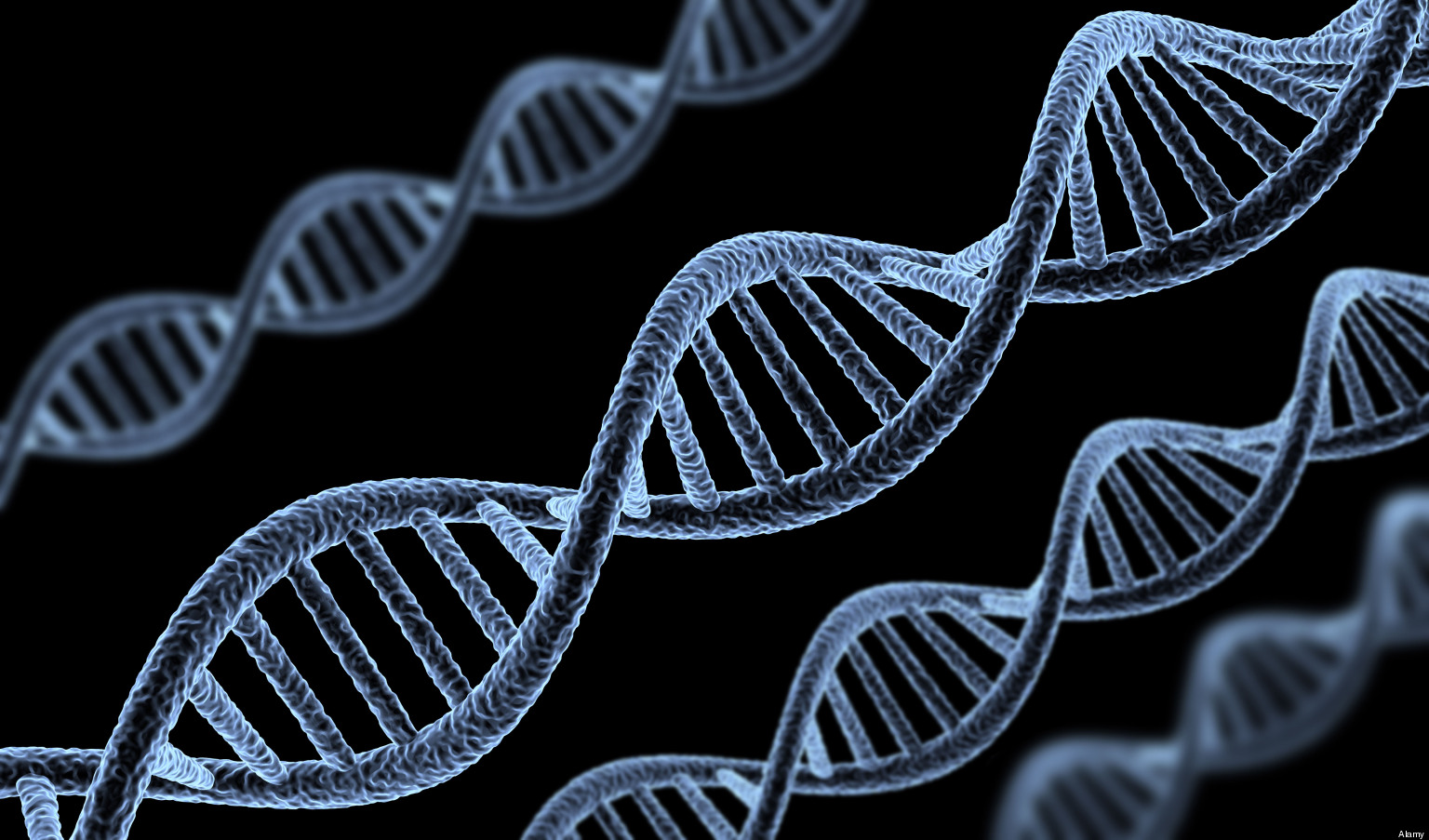
Saturday, March 25, 2017

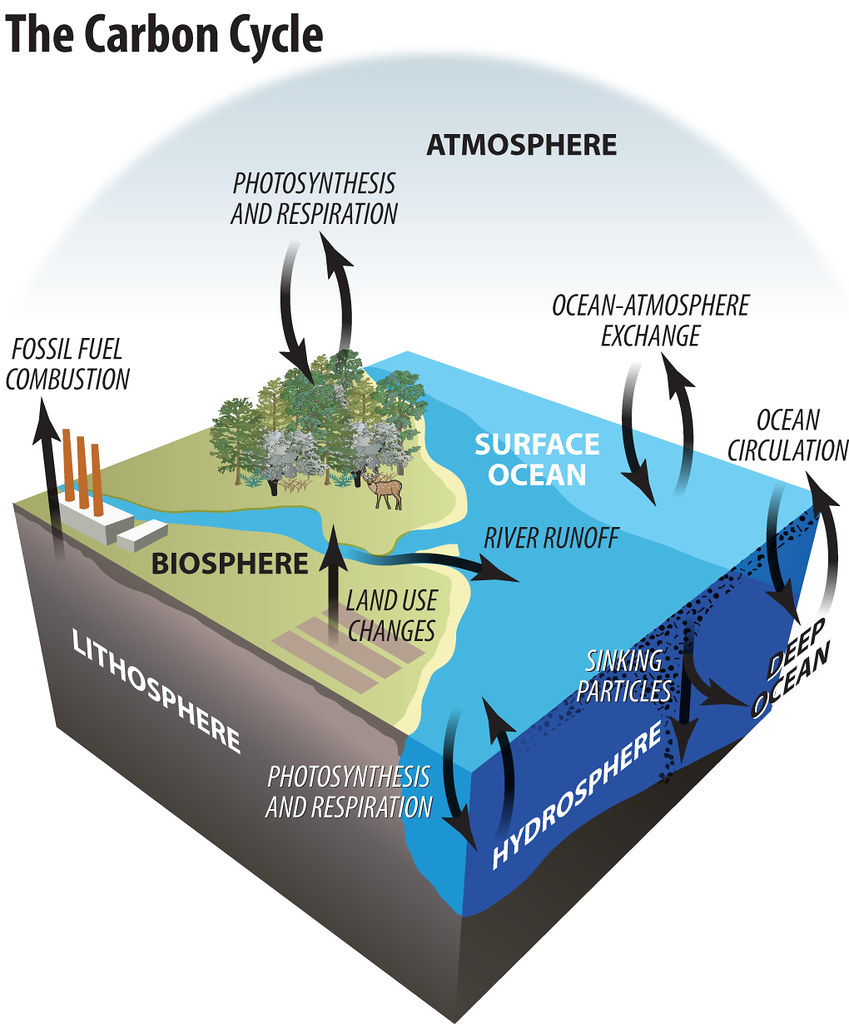
The Carbon Cycle

https://www.flickr.com/photos/timmeko/6106058409

Have you ever heard of the carbon cycle, but you didn't know what it was? Do you still? The Carbon Cycle is the Cycle of Processes in which carbon compounds are interconverted (which means when twos things are converted) in the environment that we live in. The cycle is when carbon dioxide enters the process of photosynthesis and returned into the atmosphere. But it does not go straight to the atmosphere. The animals eat it and when they die it is released. But that is not the only way, when we burn fossil fuels or create emission it is also released into the atmosphere to restart it's journey/cycle.

S&EP
SP6

I explained the carbon cycle through my work when I did a worksheet on the carbon cycle. I explained it by finding out where all the components of the cycle went and research if I was right. I explained it further when I helped a tablemate do theirs and we worked out the answers together so that they made sense and were correct.

Saturday, March 18, 2017

Wind, Weather, Climate and Storms


https://commons.wikimedia.org/
wiki/File:Storms_in_California.jpg
https://commons.wikimedia.org/
wiki/File:Climate_map_USA.PNG
  
https://commons.wikimedia.org/
wiki/File:GreenMountainWindFarm_
Fluvanna_2004.jpg


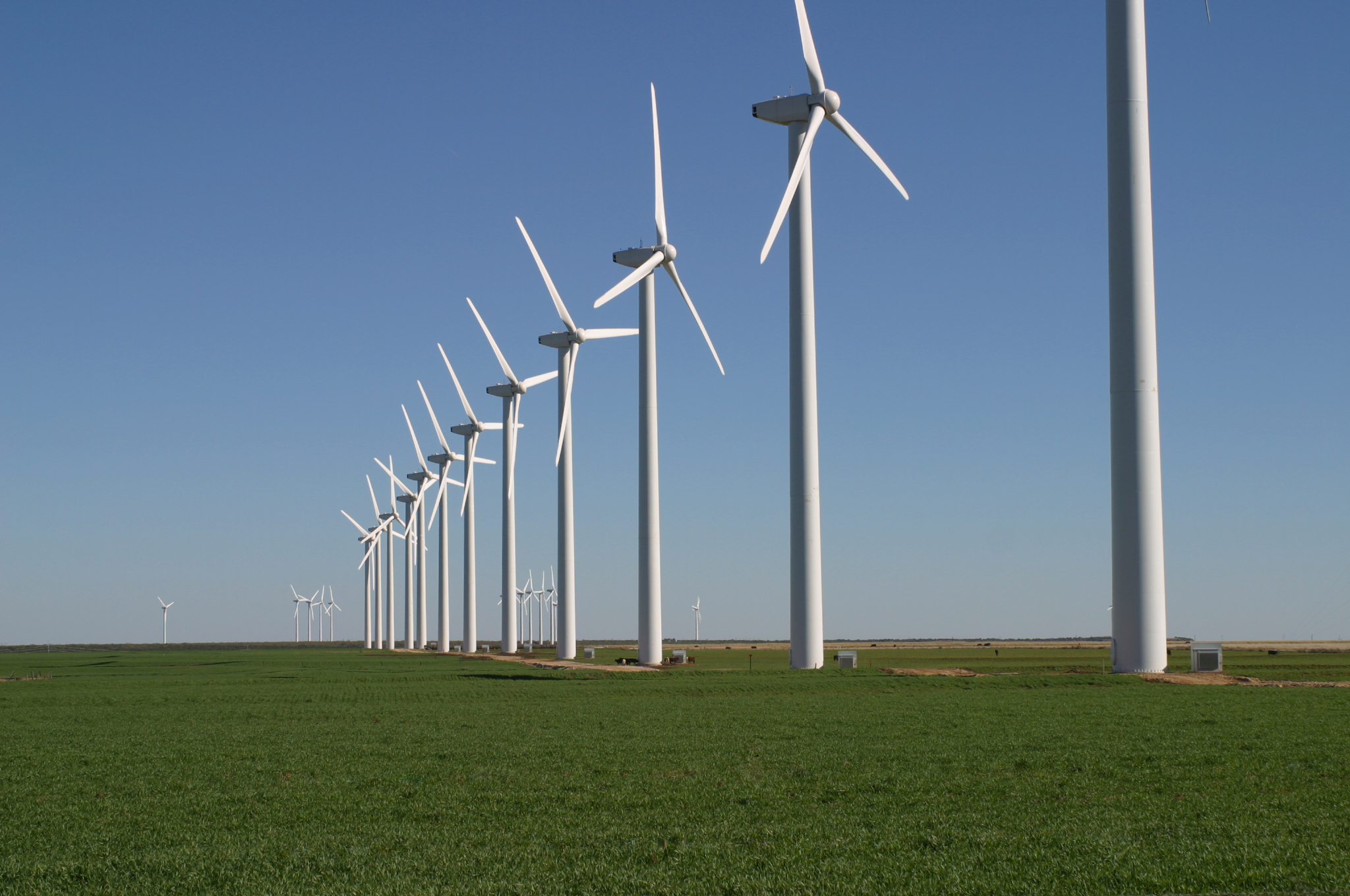
What is the difference between Weather and Climate? Or weather and storms? Or what makes a storm a storm? Or even what is Climate? Are questions people ask. But what is the answer to those questions. Well lets start with the basics. What is Weather, Climate, Wind and Storms. Weather is the condition of the outside air or atmosphere at a particular time an place. It is made by Climate. That brings us to our next question, What is Climate? Climate is the Usual Temperature or Weather of a certain area at a certain time, this is also known as the Climate system. This affects long term decisions we make and long term trends in plants and animals. Wind is a the movement of air caused by the heating and spinning of the earth. The hotter the air the higher it rises the colder the air the lower it sinks. Then their is the Barometer. The Barometer is a thing used to weigh the atmosphere or measure air pressure. This is important because the air pressure affects weather. If the air pressure is high you can expect a sunny warm day, but if the pressure get low put on a coat and get inside because it's most likely going to be Cold, Windy, and Stormy. That brings us to storms. Their are many different types of storms. Like tornado's, rainstorms, thunderstorms, and hail or snow storms. These  are caused by many things like the water cycle, spinning of the wind, and hot and cold air masses coming together. There is one place in the middle of the ocean called El Nino. It is a mysteriously warm part that causes fish to die and many storms. The answers to the questions may seem easy after that. The difference between Weather and Climate is that weather is the condition of the air or atmosphere for a short period of time where as Climate is the measure of the weather of a certain place over a long period of time. The difference between weather and storms if weather is the atmosphere that day where as a storm is what may be the weather that day.

S&EP
SP6

I explained Weather through my notes when I defined what qualified as weather and what is weather really. I explained Climate through my notes when I defined what was the difference between weather and climate how does it affect us of other things, what is the difference between Climate and Weather, and What is Climate. I explained Wind and Storms through my note when I answer questions about them to help me learn and understand them better.

Thursday, March 9, 2017

Peguin Home


We made a "Penguin" homes that had to keep a Ice Cube cold for twenty minutes. We made out house out of Styrofoam plastic, cotton, and air bags. After twenty minutes in the sun we still had 84% of our Ice Cube. If we had to do this project again I might make another layer on the outside to make it more insulated. I also would have Insulated the lid of the cooler more so we lost less of the cold air.

Backwards-looking

I did not know much about heat and insulation before the project. I also did not know much about what insulated well and what didn't. I also did not know much about the topic of heat movement.

Inward-looking

I really like the piece of work that I did. I really like the many layers that we put in for insulation. My least favorite part of the project was the lid because I thought that it could be more insulated. What I enjoyed was the building of the project and actual project.

Outward-looking

I would give the project an A because not only did we meet all the requirements we exceeded them. Also we had 84% of our Ice Cube left so we had most of our ice cube left and that means that it was well thought through and well built.

Forwards-looking

If I had a chance to do this project again then I would probably insulate the top more, bring the materials on monday so that we had more time, and spend more time on the answering questions part of the project. I also would check the requirements before we made things to meet them so that we did not have to go back and fix the mistakes.


Sunday, March 5, 2017

Heat and Heat Transfer

http://www.spectrose.com/modes-of-heat-
transfer-conduction-convection-radiation.html

            What is Heat? Heat is a form of energy when things get hot the molecules move faster and the object then has more energy. When things get cold the molecules slow down and the object gets cold. Like when you rub your hands together really fast to make them warmer. When you rub your hands together that make friction which makes energy which makes heat. But have you ever wondered why your feet start to burn when you walk on sand at the beach on a sunny day, or why when you stir a hot drink with a metal spoon the spoon gets hot, or why does the side of you that faces the fire get really hot? The answer to that is heat transfer. There are three different types of heat transfers, Convection, Radiation, and Conduction. Convection is the simple movement of heat, hot air rises cold air sinks, like when you walk barefoot on the sand at your favorite beach on a sunny day and you feet start to burn. This is because the hot air in the ground rises into your feet. Convection is the transfer of heat through fluids. Radiation is when heat is transferred to another object through electromagnetic waves. When you get warm from sitting by a fire it is because the fires heat is being transferred through electromagnetic waves to get to you. Last but not least we have Conduction. Conduction is the transfer of heat when two objects are touching. When you stir a hot drink or a hot cup of soup with a metal spoon and the spoon gets hot this is because the heat from the hot substance is being transferred to the spoon by conduction.

S&EP
SP2

I drew a picture of the three types of heat transfer so that I could better understand them. This helped me because I was able to see how the three types of heat transfer worked and how it looked when it worked. This also helped me differentiate the different forms of heat transfer from each other by seeing the way that they worked.

Saturday, February 11, 2017

Solids Liquids and Gas

https://www.sciencelearn.org.nz/images/1839-three-states-of-matter


The three most common states of matter are solid, liquid, and gas. First it starts as a solid. A solid is the part of matter when theirs almost no energy and the energy particles are clumped together. Solids have a definite size and shape. Then when the energy particles get farther apart they move faster and faster then it turns into a liquid. This process is called Melting. 
     Once the solid has melted it turns into a liquid. A liquid is the state of matter where the energy particles are still close but not as close to each other as the solid was and they are moving faster and getting faster as they move away from each other. A liquid takes the shape of it's container. Then when the energy particles start moving farther and farther away they get faster and faster. Then the energy particles get so fast and so far away that they turn into a Gas. This process is called Evaporation.

S&EP

SP6

I explained the three states of mater through my work when I took notes and did a worksheet on the three states of matter and their differences and similarities.  I explained the three states of matter also when explained what they did and how they moved through the exercise / movements on how it would be to be the particles in these three states of matter.

Friday, February 3, 2017

My Superhero


We made superhero's in our science to explain genetics. First we choose an animal with super powers. Like a flying squirrels ability to fly. Then we created our first super hero off of the animals abilities. We had to come up with a name, their powers, what they looked like, an origin story, their environment and epigenetics. Then we had to mate them with a super villain and make a baby then we had to find out what the babies name, powers, outfit, and genes would be. Then we had to make a villain side of our superhero and had to give it a name, change 4 body systems and write their powers, origin, and about the body systems we choose.


Backwards looking:

I didn't now much about the subject of superheros and genetics before I did this project. I did know somethings about genetics and super hero but they were just small and mostly the basics. I think that I definitely could have known a lot more as a whole to begin with but I think that I knew enough to make it through the project

Inward Looking:

I feel really good about my finished project and I really like what I did for my superhero and I really like the fact that we had lost of times do I could prefect it. I really like my  villain because it mirrors my superhero but sense the body system changed it has more powers and it stronger. What I don't care for though is my epigenetics. I don't like this because I feel I could have done better on it.

Outward looking:

If I were to give this a grade I would give it an A because it has some good work in it and it meets and exceeds all of the expectations. But I wouldn't give it an A+ because some of the stuff only meets the expectation. I would also give it an A because it has at least all of the needed things and has over a paragraph for

Forward looking:

Saturday, January 28, 2017

Mutations.

http://biologypop.com/dna-mutation-info/

Have you ever wondered how the differences in our genes com about? The answer to that question is Mutations. Mutations are when your genes are copying the DNA before cell divisions certain mistakes or typo's are made. This is very common in people. Because of Mutations we have 60 different things our parents didn't have. Some versions of Mutations are when the cell adds another base which is called an Insertion Mutation, deletes a base which is called a Deletion Mutation, or substitutes a base for another which is called a Substitution Mutation, or it shifts the DNA over one which is called a Frame shift mutation. Mutations could be good or bad depending on where they are found. But most of the time they are neither  good or bad just different. The only kind of Mutation that will or could be bad it a Mutation in the cells that make and control the proteins your body produces. Sometimes these Mutations can be passed down to children. Sometimes Mutations have no or little effects on you or the way you look. Other times they can have big affects. Most ways that mutations happen are natural but sometimes they happen because the thing has been genetically modified. You can see many genetically modified things in foods.


S&EP

SP6

I constructed an explanation of Mutations when I came up with ways my superhero that I created got mutations that turned her into the superhero that she was. I also explained it when I made my came up with reasons why her DNA was changed and how. I finally explained it by adding what type of mutation she got.


Saturday, January 14, 2017

Non-Mendelian Genetics.

https://www.pinterest.com/explore/most-beautiful-dogs/

https://www.pinterest.com/pin/354658539376495192/


Have you ever wondered why animals and plants can be multiple colors if Mendel thought that they could only be one? Or why some animals have two different colored eyes? This is called Incomplete dominance or Co-dominance. Incomplete Dominance is a blending of two different Dominant traits that make a third trait that is a blend of the two traits. The third trait is the trait that will show up. Co-dominance is when the two original traits ore combined to make a multi colored or spotted trait/phenotype. This is called non-Mendelian genetics because Gregor Mendel thought that their could only be a recessive and a dominant trait and that their could not be two of a certain trait. The puppy (above left) and the flower (above right) are two examples of this. They are both an example of co-dominance. 


S&EP

SP6


I explained Non-Mendelian Genetics through my notes in class because I made sure that everything that I wrote I understood. Also so that I wrote down everything that I felt explained Non-Mendelian Genetics so that I could fully explain and understand Non-Mendelian Genetics.

Saturday, January 7, 2017

Guessing genetics

http://www.freepik.com/free-icon/question-mark_731610.htm
http://www.med.upenn.edu/genetics/


Have you ever wanted a certain breed of dog or pet? Have you ever wondered how they got that dog to be that certain breed? The answer is cross breeding. Many pet shop owners do this. Where they take two dogs of two different breeds and cross breed them. But how do they know what results they're going to get and if they are the results they want? They use the punnett square. The punnett square was invented by Reginald Punnett. The Punnett square is used to organize the chances of your pet getting to be the breed you want it to be. But once you get your punnett square how do you know what the breed will be?

You would know because 75-100% of dominant will mean it will probably get the dominant trait and 75-100% recessive will mean it will probably get the recessive trait. If it is 25-50%  dominant or recessive they will probably try to breed the animal with a different one of that animal. Usually that will happen to all of the traits and they will decide if they need to breed it with a different type depending on what percent is the trait they want. They do this till they get the breed they want. This method can be used to determine and guess any living things traits.


S&EP
SP4

I made a model of the data that I collected throughout my experiments when I made a drawing of what my superhero's traits would look like. She would have super strength, can climb, can fly, and has super speed. I drew all four of these traits. It also helped me see more of what my superhero would be able to do and pulled together everything that I had collected over the course of finding out my superheros traits using punnett squares.


Thursday, December 15, 2016

Genetics.


                Have you ever wondered what makes you, you. Lets go back to before you were born. You parents each have traits. Like their hair color, eye color, and other things. All of these traits make up what they look like on the outside. You have inherited these traits from your parents when you where born. If we go awhile back in the 1800 till then nobody knew about genetic. This one man named Gregor Mendel discovered genetics. He found out that genetics made you who you were. Gregor Mendel grew pea plants in his backyard. Now if we studied pea plants we would notice they have different looks. These are because of traits. Traits are notable characteristics. Every gene has two geneotypes or possible traits. Their is a dominant = D  and a recessive trait = d. Possible pairings are DD, Dd or dd. Your parents each have a set of traits. They contain recessive and dominants traits. They pass you half of their traits. That is how you got yours. Lets say your mom has brown hair = h and your dad has Black hair = H. Now you have brown hair. That means you mom had to have a pairing of hh and your dad had Hh so know you have hh. A better way to organize this is a punnet square.


A Punnet square is a way of organizing the genotypes of your parents and showing the possible outcomes of you and your traits.  Lets say your mom had brown and your dad had black hair. You would start by drawing your everyday square.
Then you would split the square into four different parts. 
Then you would fill out the out side of the square by putting your dads Genotypes on the top one above each box and your moms genotypes along the sides one letter next to each box.
Then you would drop down the big H and little h from your dad into the squares below and move the two little h's across into the squares next to it.
And thier you have it those are the possibilities that you will have brown or black hair. The ratio is 2:2 so you have a 50% chance of getting brown and 50% chance of getting black. So basically you get the genes and traits that you have through heredity and your parents. 


S&EP
SP4

We created punnet graphs to show the animals traits. We also did punnet squares to make the baby bunnies traits and to show the possible out comes and choose which out come we wanted them to have that went with the instructions.
Saturday, December 10, 2016

The Charity Fair


                The Charity fair is a group or self project where the class select to work alone or with a partner / group of three. Then the group decides on a charity that matches the topic that they choose that they wanted to learn about. Then each group make a product to sell, ignite presentation, and a tri-fold. Along with doing charity statics and research and a cost and profit and instructable. Then the group is to present their ignite and sell their product to the parents on exhibition night. My group was with Izzy and we choose the ARF, Animal Rescue Foundation as our charity and made hand painted to look like animal print ornaments. Overall it was one of the most fun, exciting, and stressful moments of my life. But overall I loved the experience and finished product.

Backward-looking

               I knew kind of a lot about the subject because I had done it the year before and was used to it. But I did not know a lot about the charity I choose an animal abuse when I first went into the project. I feel like it was a good and balanced amount of learning. Also, I did not know a lot about the impact charities had on the world. I feel like I came out learning a lot yet not having to learn everything.

Inward looking

I feel really good about how my work turned out. I really liked how our ignite turned out especially because Izzy and I messed up big time in our practice round. I really like selling our product and presenting our ignites. I also liked learning about other chosen charities. I didn't like the statistics part though it was not my favorite because it was complicated and stressful trying to memorize the numbers and find them. I really liked the making of the product and how it turned out.

Outward looking

I would give the grade an A because it had all of the components and they were complete. Also because we sold over half of our product and made lots of money. I would give it that grade because the tri-fold had everything that was needed. Also, the project meet all of the criteria. I also think that it should be given an a because we got full credit on almost everything in that project.

Forward Looking

If I was to do the project again I probably would have worked alone. Also I would have made the tri-fold more attractive so that more people could see it. I would set up in the middle of the room not the corner and make sure that everything was done early so I had time to check it. Also I probably would have talked slower on our presentation.

Is there life in Space?

News | The Solar System and Beyond  by JPL - NASA Have you ever watched sci-fi movies where there are aliens or extraterrestrial life, ...